
Dog Grooming Client Record Management
Good records are the quiet foundation of a professional grooming business. This guide covers what to record, why paper and spreadsheets eventually fail you, and how to move to digital records without the disruption.
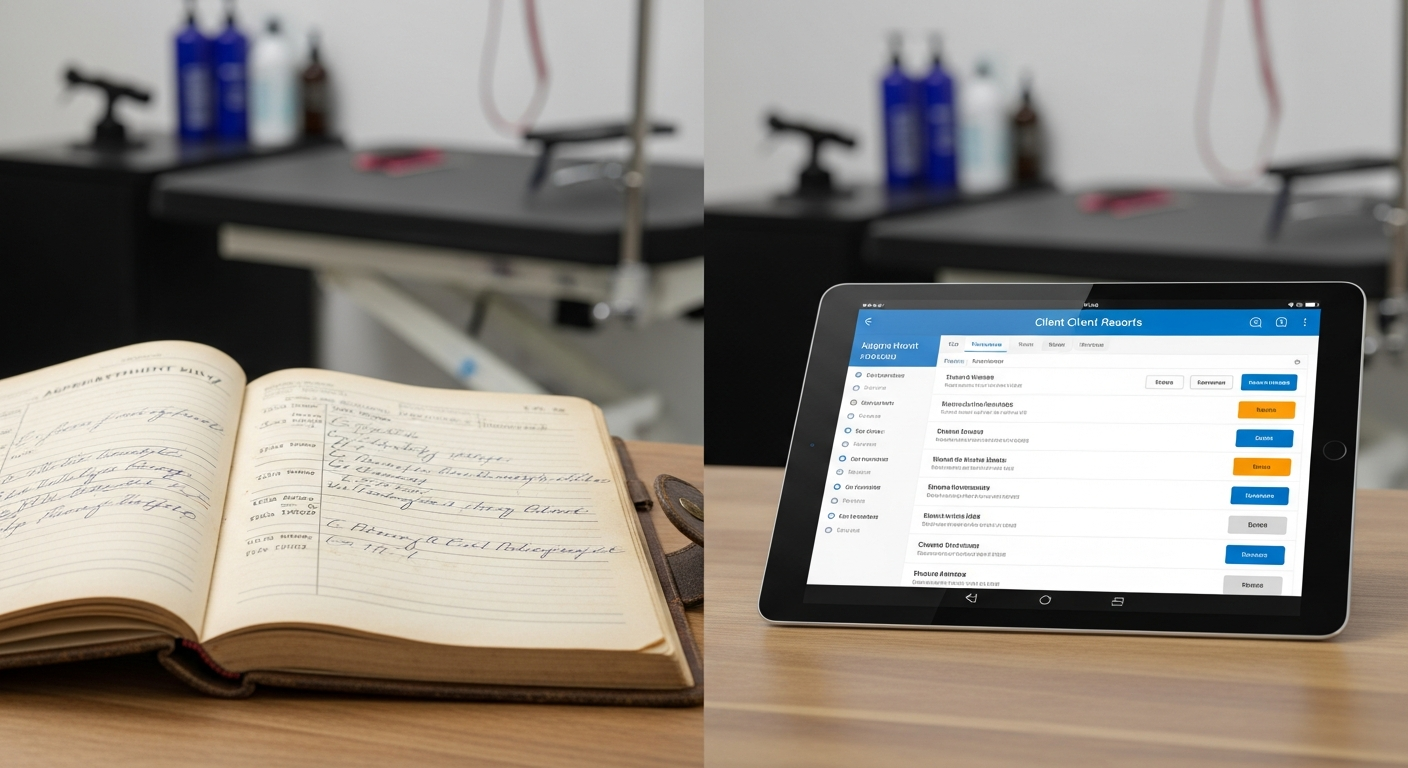
Why records matter more than groomers think
When you're starting out with a handful of clients, you carry everything in your head. You know every dog by name, you remember which ones need a muzzle, and you can recite each owner's number from memory. It works — right up until it doesn't.
The moment you take on more clients than you can hold in your memory, or bring in a second groomer, or take a holiday and need someone to cover, the cracks appear. Good records aren't bureaucracy — they're what lets your business run without depending entirely on you.
What to record for every client and dog
A complete grooming record has two layers: the client (the owner) and their dogs. Here's what each should contain.
For each client
- Name and contact details
- Preferred contact method
- Appointment history
- Reliability notes
- Signed consent forms
For each dog
- Breed, age, weight, coat type
- Vaccination status and dates
- Behaviour and handling notes
- Grooming history and photos
- Custom pricing if needed
The critical detail is that these two layers should be linked. When you open a client, you should see all their dogs. When you open a dog, you should see its full history. That linkage is exactly what a purpose-built system provides and what loose notes never will.
For individual service updates such as a dog being ready for collection, client messaging from the record keeps the outbound message alongside the client details.
Why paper and spreadsheets eventually fail
Paper cards feel comfortable and personal, but they can't be searched, can't be in two places at once, and a single spilled cup of coffee can destroy years of history. When a client phones to rebook, you're flicking through a box file while they wait.
Spreadsheets are a step up, but they buckle under real-world use. They don't link clients to dogs to appointments. They're awkward and risky to share across a team. And they offer no reminders, no booking, and no history beyond what you manually type in. They're a list, not a system.
The benefits of digital records
- Find any client or dog in seconds, even mid-call
- Your whole team sees the same up-to-date information
- Records link automatically to appointments and history
- Vaccination dates and notes are never lost
- A professional, auditable record for data protection
- Rebooking returning clients takes moments, not minutes
How to move from paper to digital without the pain
The mistake most groomers fear is having to sit down and type in years of records in one weekend. You don't. The simplest approach is to add clients as they next book in. Each client visits roughly every six to eight weeks, so within a couple of months of normal trading, the vast majority of your active clients are in the system.
Keep your old records to hand for the transition period, add each client as they come through, and let the system fill itself. By the time you've finished, your busiest and most valuable clients are already fully recorded.